

Earthing and Protection
Proper grounding is essential for protecting the transformer and people.
Grounding the neutral point
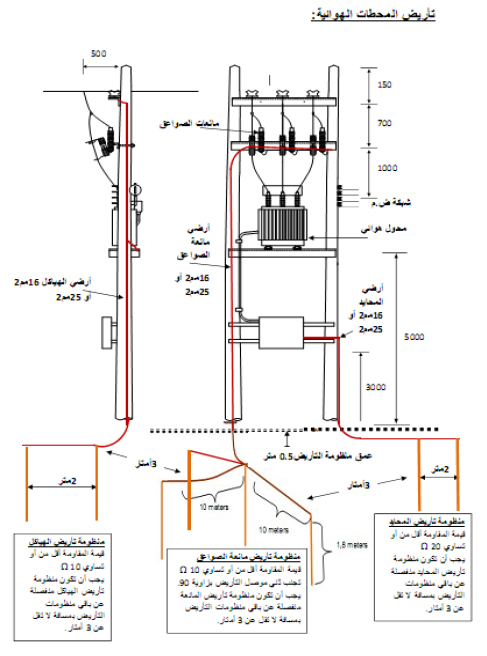
The neutral grounding point must be grounded separately and away from the lightning arrester grounding, and the resistance of this grounding must not exceed 1Ω.
lightning arrester grounding
The lightning arrester must be grounded separately, and the grounding resistance must not exceed 1Ω.
Grounding material quality
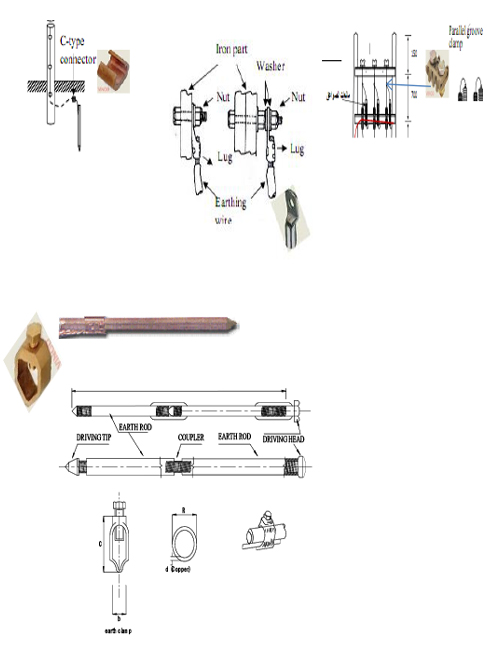
When implementing grounding, it is preferable to use at least galvanized sheets, and ideally galvanized materials or copper grounding. Ensure that connection points and screws are clean and free of oxide to guarantee excellent contact.
Grounding the structure
The transformer body must be connected and grounded, and the grounding resistance must be less than 5Ω.
Inspecting the transformer board for proximity
The transformer panel should be regularly inspected for any contact points between the phase and ground wires, as these can cause electrical sparks during voltage surges such as lightning strikes. Any such contacts should be removed to prevent short circuits and damage to the transformer.
Adjusting the spark gap
The spark gap bars must not be interfered with, and if their setting changes during transport, they must be readjusted according to the maintenance and operating instructions attached to the transformer.
Connections and Loading
Accurate connection and balanced loading protect the transformer core and its coils.
Prevent relaxation
The connections must be tightened using counter nuts to prevent them from loosening, and it is preferable to use a thin iron ring to ensure a tight fit.
Safety of low-voltage connections
The surface of the copper foil and nuts must be clean and straight in transformer connections, especially in low-current busbar connections.
Circuit Breaker
It is important to note that the current-breaking contact must be fully closed during operation. If one phase remains open, it will result in excessive current to the transformer and a voltage imbalance, which could cause the transformer and connected motors to burn out.
Balanced operation
The transformer must be loaded evenly, with the load distributed equally across the phases. The load distribution should be checked at different times of day using an ammeter.
Selection and installation - fuses
The appropriate fuse must be selected for the transformer’s power rating. Using wires instead of a fuse is strictly prohibited. The fuse must be securely installed in the jaws; any bending in the fuse will damage the transformer.
Regular temperature monitoring
Temperature monitoring is a key indicator of safe operation.
Cable and section temperature check
The cable running from the transformer’s low-voltage outlet to the circuit breaker must be inspected for heat and connections, as overheating of the connections accelerates transformer burnout. Particular attention should be paid to ensuring the cable is not bent or damaged as it descends from the pole.
Connection temperature check
The low-current connections of the transformer should be checked regularly for overheating, either by observing a change in color or using a remote laser thermometer. If the temperature rises, the cause should be identified and the problem resolved immediately.
Thermal magnetic switch inspection
The calibration and temperature of the thermomagnetic thermometer must be checked, and it must be kept at normal levels.
Maintenance Management
Conscious management of large-capacity transformers.
Secondary protection battery check
If the secondary protection battery runs out of charge or reaches the end of its lifespan, the protection will be completely lost. For this reason, batteries should be checked at least once a month.
Secondary protection controls
In transformers with a capacity of 630 kVA and above, secondary protections must be properly adjusted, made effective and operational, and checked periodically.
End user education
The authorized electrical engineer or company must inform the end user of all operating and maintenance instructions, and periodic system maintenance must be carried out according to a specific and clear schedule.
Follow the operating instructions
The operating and maintenance instructions for the transformer must be read carefully, followed, and applied, just as with any electrical appliance.